About the Author: Dolce Music Institute Editorial Team

Berlin is a city that can be experienced in a truly impressive way, even without a large budget.
That is precisely part of what gives the city its particular charm.
Many of the city’s most fascinating places are not hidden behind ticket desks or entrance gates, but form a natural part of the public space.
With that in mind, here are 10 free things to do in Berlin that offer a particularly beautiful and authentic way to experience the city.
To truly understand Berlin, you do not necessarily need to spend a great deal of money.
Often, it is enough simply to walk through the city attentively and let its history, contrasts, and unique atmosphere unfold around you.
1. Visit the Reichstag and its dome
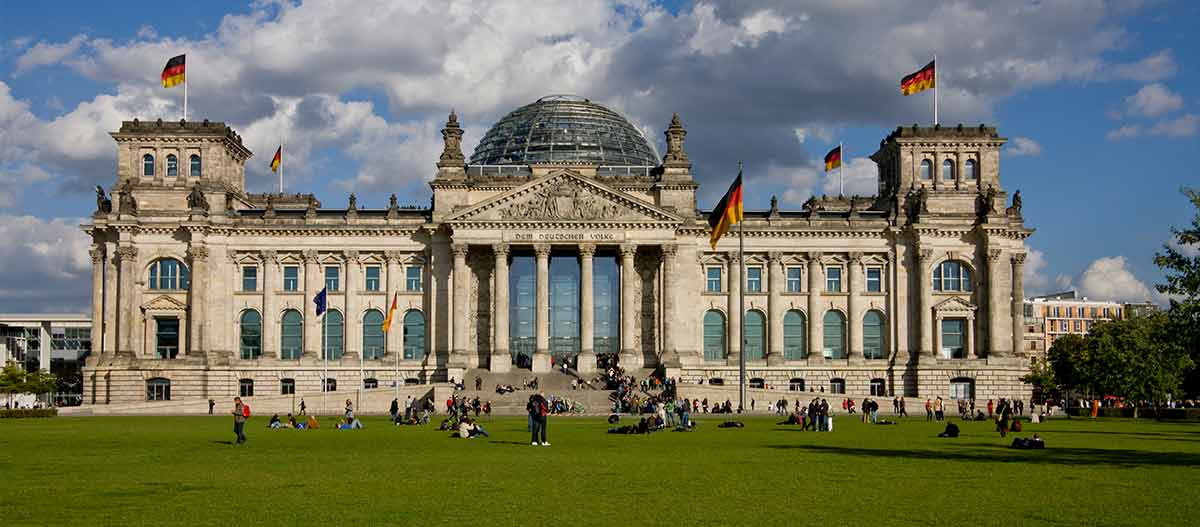
The Reichstag is one of Germany’s most important buildings, as it is where the German Bundestag meets.
What is particularly striking is the contrast between the historic building and the modern glass dome, which is now regarded as a symbol of openness and transparency in German democracy.
The Reichstag is far more than just a well-known landmark.
It brings together key chapters of German history: the Empire, war, division, and reunification.
For many visitors, this is one of the most impressive free experiences in Berlin, as architecture, politics, and panoramic city views come together here in a particularly striking way.
Access to the rooftop terrace and the dome is free of charge, although advance registration is required.
There may also be restrictions depending on the security situation or parliamentary schedule.
Official website: German Bundestag
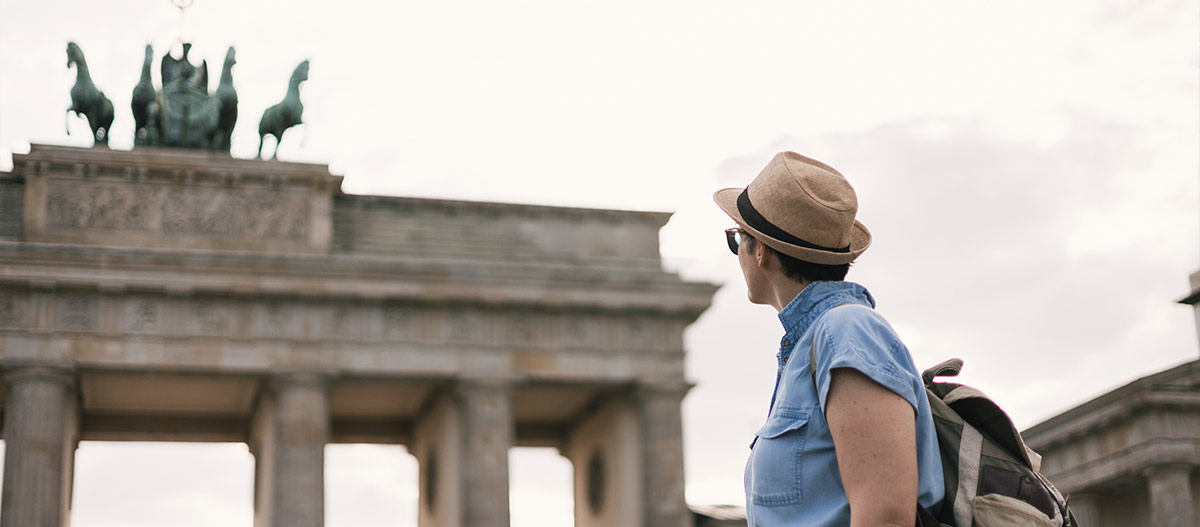
2. Visit the Brandenburg Gate
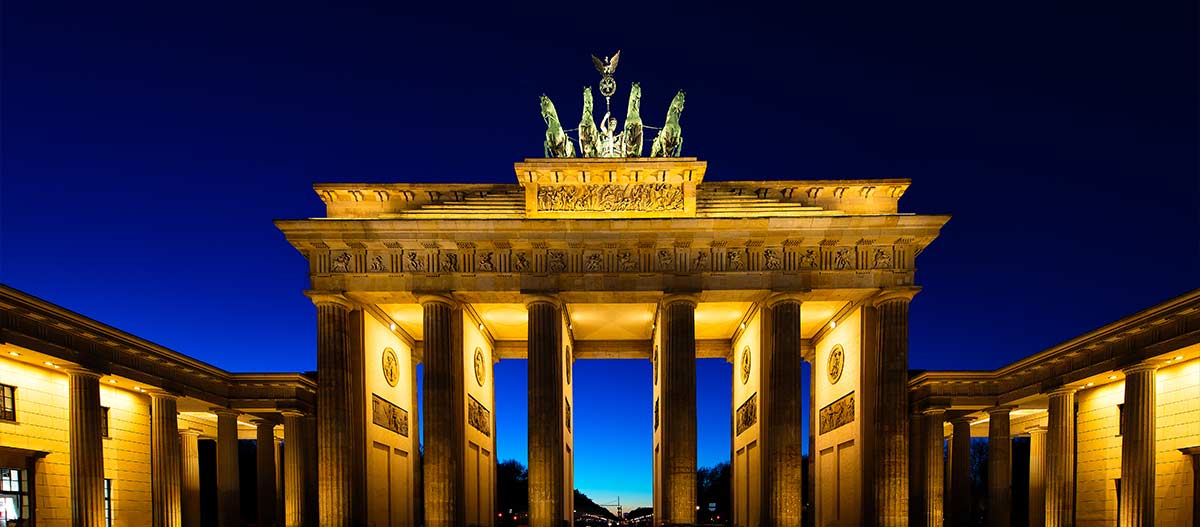
The Brandenburg Gate is one of those places that still makes an impression, even if you have already seen it countless times in photographs.
It was built in the 18th century and is now one of Berlin’s best-known landmarks.
At the same time, it is closely bound up with the city’s history.
During the division of the city, it stood directly in the border area, not far from the Berlin Wall.
After reunification, it became a symbol of a Berlin growing back together.
Today, the Brandenburg Gate is an essential stop on almost every visit to Berlin, but it is well worth doing more than simply pausing here for a quick photograph.
If you take a little time to pause here, you quickly sense just how much history this place holds.
Pariser Platz all around it also lends the whole setting a particular sense of dignity.
Official website: Brandenburg Gate
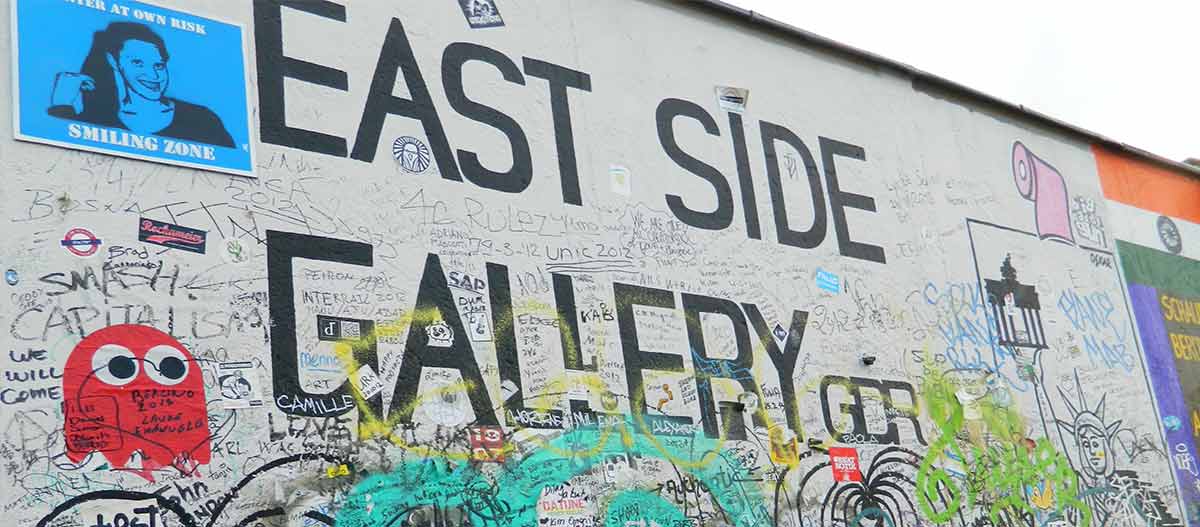
3. Walk along the East Side Gallery
The East Side Gallery shows in a particularly striking way how Berlin engages with its history.
This preserved section of the Berlin Wall stretches for more than 1,300 metres along the River Spree and was painted by artists from around the world shortly after the Wall came down.
It officially opened as an open-air gallery in 1990 and is now one of the city’s best-known sights.
It is precisely this combination of history and art that makes the place so special.
You are standing in front of an actual remaining section of the Wall, a symbol of division, while at the same time facing colourful, often political murals that speak of change and new beginnings.
The East Side Gallery captures very well what defines Berlin: not hiding its past, but dealing with it openly and visibly in public.
Official website: Berlin Wall Foundation – East Side Gallery
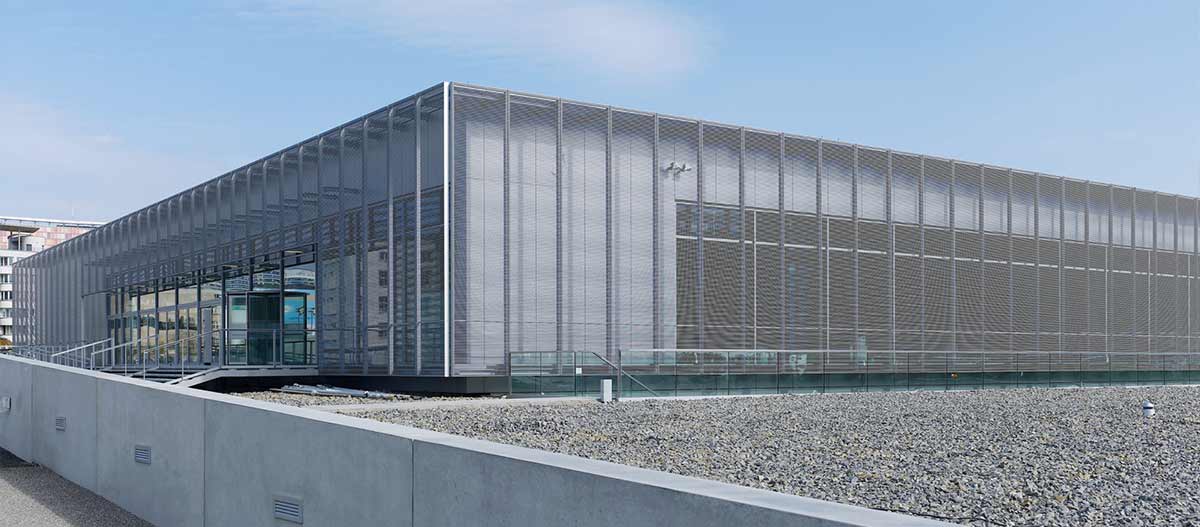
4. Explore the Topography of Terror
The Topography of Terror is one of Berlin’s most important historical sites.
The documentation centre stands on the site where the central institutions of Nazi terror once had their headquarters, including the Gestapo, the SS leadership, and the Reich Main Security Office.
That fact alone gives the site a particular gravity.
The exhibition is factual, clear, and highly informative.
Precisely because it is located on an authentic historical site, it feels immediate rather than abstract.
A visit is not light viewing, but it is exceptionally worthwhile if you want to understand Berlin in a serious and meaningful way.
The fact that admission is free fits very well with Berlin’s commitment to making even its most difficult history publicly accessible.
Official website: Topography of Terror
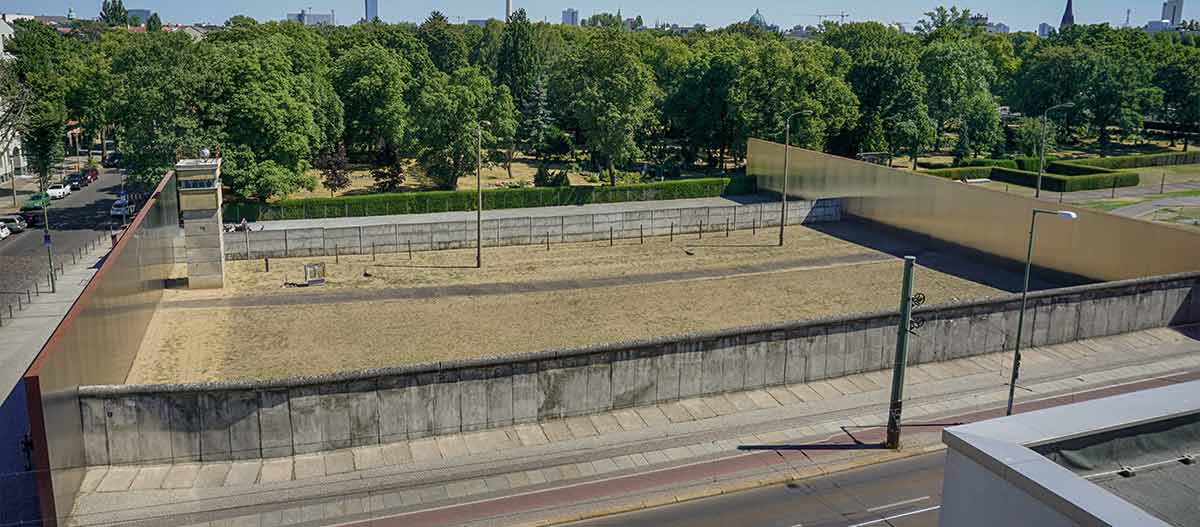
5. Visit the Berlin Wall Memorial
Anyone wishing to understand how the Berlin Wall actually functioned should visit the memorial on Bernauer Strasse.
Here, you do not just see isolated remnants of the Wall, but a larger, coherent memorial site featuring a preserved section of the Wall, parts of the former border strip, a watchtower, an observation platform, and accompanying information.
That is precisely what makes this place so striking.
Here, the division of the city is not only explained in theory, but made tangible in physical space.
It gives you a far more concrete sense of how drastic this rupture was in people’s lives.
The memorial is designed in a quiet and restrained way, and for that very reason it feels especially powerful.
Official website: Berlin Wall Memorial
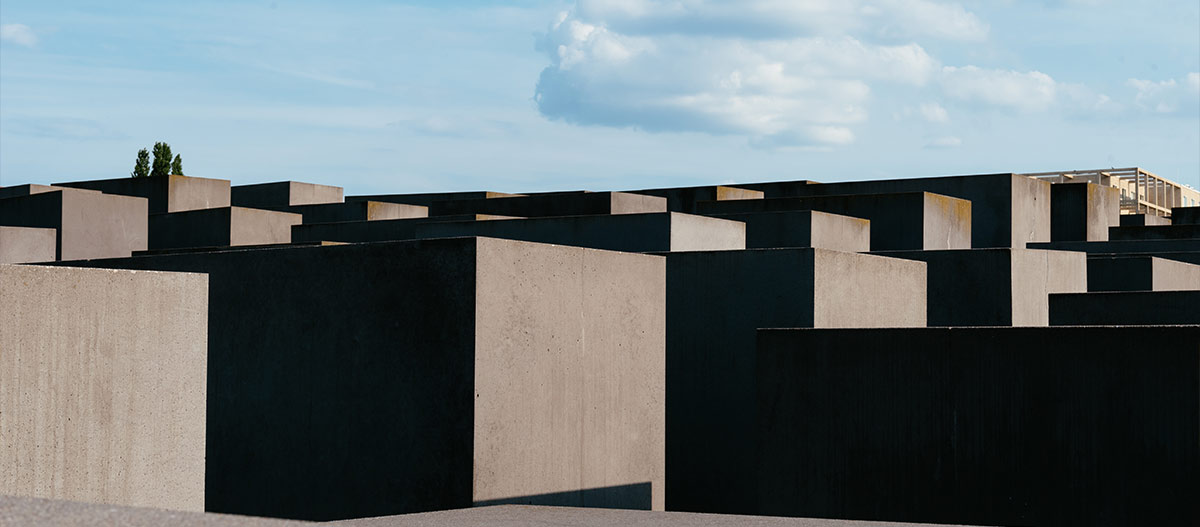
6. Visit the Holocaust Memorial
Just a short walk from the Brandenburg Gate stands one of Berlin’s most striking memorials.
The Holocaust Memorial is Germany’s central memorial dedicated to the Jewish victims of the Holocaust.
It consists of a large field of concrete stelae and an underground information centre.
Admission is free.
Many visitors experience this place less through explanatory texts than through its physical impact.
As you walk between the stelae, your sense of space begins to change.
The ground slopes downwards, the blocks rise above you, and the noise of the city seems to recede into the background.
It is a place of reflection that lingers in the memory precisely because of its openness.
Official website: Foundation Memorial to the Murdered Jews of Europe
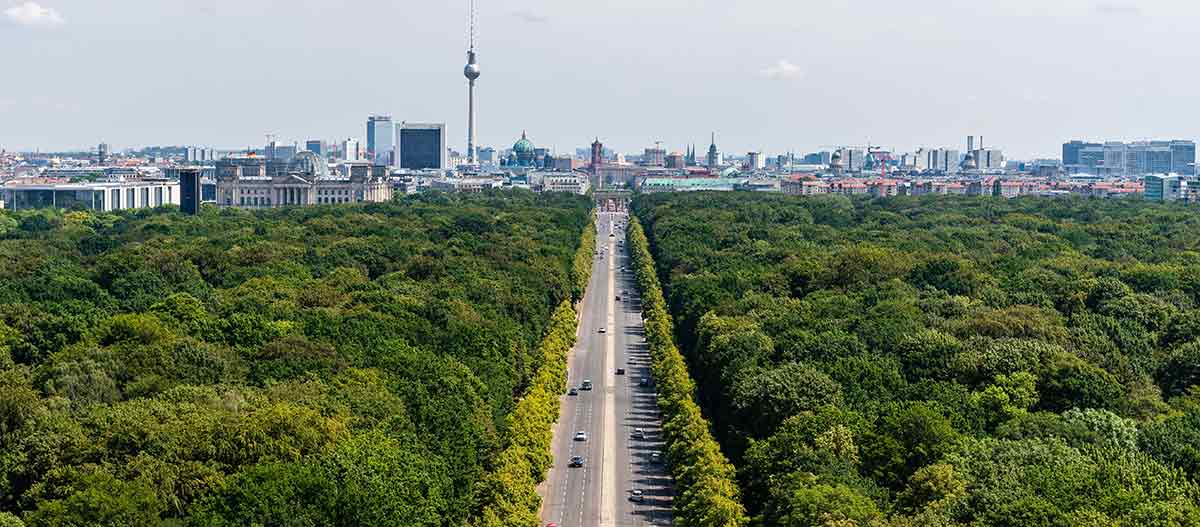
7. Relax in the Tiergarten
After several historically intense stops, the Tiergarten reveals a different side of Berlin.
The large park in the centre of the city lies close to many well-known sights, yet once inside it feels surprisingly peaceful.
There are broad paths, open lawns, tree-lined avenues, memorials, and various cultural sites scattered throughout the park.
The Tiergarten is one of the most enjoyable free things to do in Berlin.
Here, you can go for a walk, take a breath, and experience the city at a gentler pace.
It is a reminder that Berlin is shaped not only by history and politics, but also by public life, open space, and moments of calm.
Official website: Tiergarten
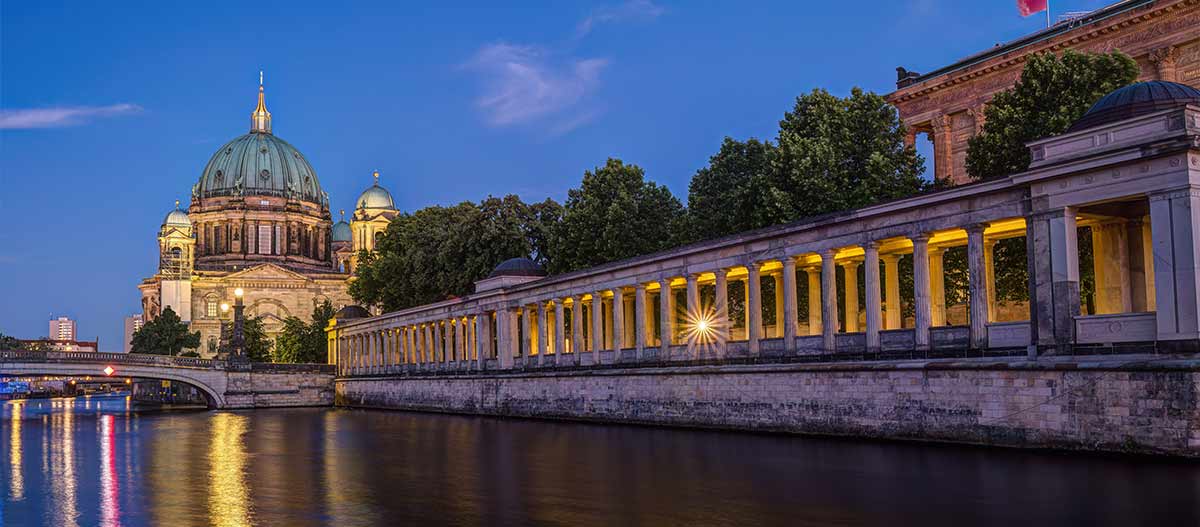
8. Stroll around Museum Island
Museum Island is one of Berlin’s most beautiful cultural places.
It is located in the heart of the historic centre on the River Spree and brings together five major museums as well as the James-Simon-Galerie.
The entire ensemble is a UNESCO World Heritage Site.
Even though admission to the museums themselves is not usually free, a walk around the island is certainly worthwhile.
Even from the outside, this place is impressive.
The architecture, the waterside setting, and its proximity to Berlin Cathedral give the area a distinctive atmosphere.
Anyone interested in urban history, architecture, and Berlin’s cultural side will find this a very rewarding stop, even without visiting the museums themselves.
Official website: Museum Island
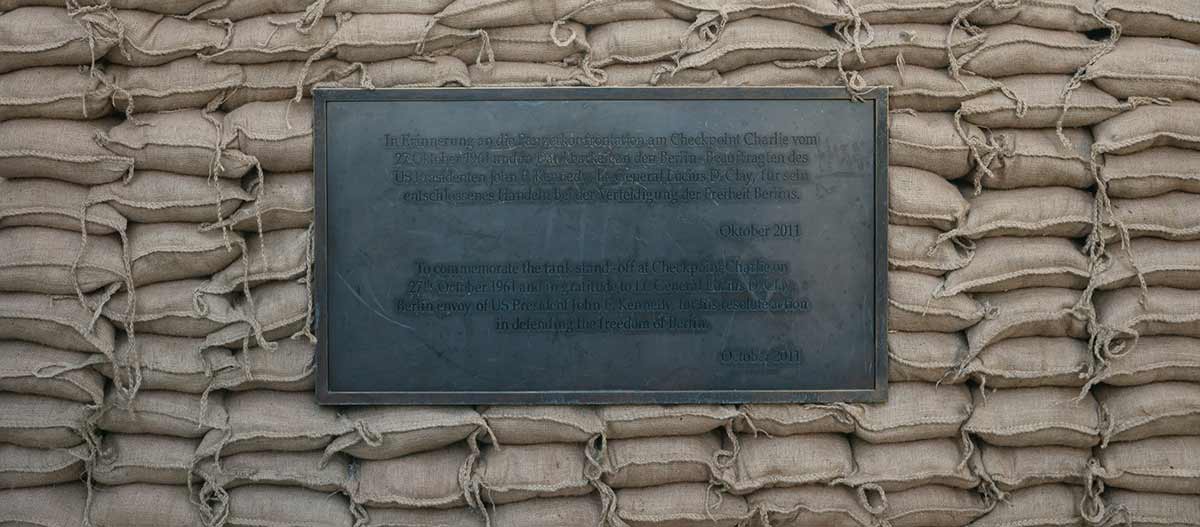
9. See Checkpoint Charlie
Checkpoint Charlie is one of the most famous sites of the Cold War and remains closely associated with the history of divided Berlin to this day.
At the corner of Friedrichstrasse and Zimmerstrasse once stood one of the most famous border crossings between East and West Berlin.
Today, reconstructed elements such as the guardhouse, flags, and sandbags recall that period.
Naturally, the area is now heavily shaped by tourism, and the site feels quite different from some of Berlin’s quieter places of remembrance.
Even so, it is worth a visit, if only because Checkpoint Charlie has become a global symbol of division.
Anyone who visits it alongside the Berlin Wall Memorial or the Topography of Terror will be able to place it in its historical context much more clearly.
Official website: Checkpoint Charlie
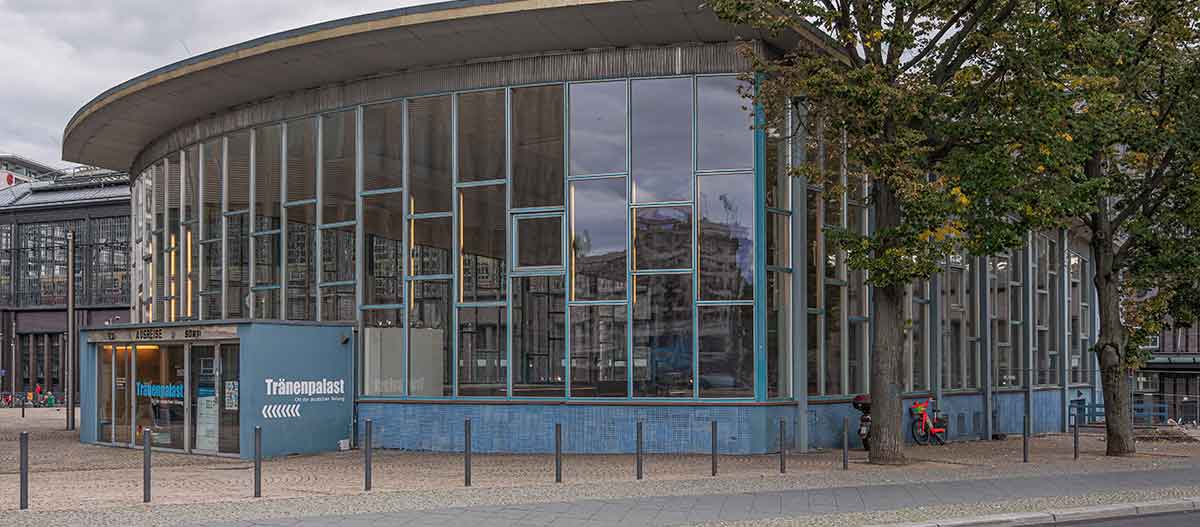
10. Visit the Palace of Tears
The Palace of Tears is one of Berlin’s quieter memorial sites, yet also one of its most moving.
During the years of German division, it served at Friedrichstrasse station as the departure hall for people leaving East Berlin for the West.
It acquired its name because of the many painful farewells that took place there.
Today, the exhibition shows very vividly how division and border controls affected the lives of ordinary people.
Precisely because the focus here is less on grand political symbols than on personal stories, the site often leaves a particularly lasting impression.
Anyone interested in everyday life in the divided city should not miss this visit.
Official website: Palace of Tears
Conclusion
What is so appealing about these free things to do in Berlin is that they are not merely a fallback for travellers on a smaller budget.
On the contrary, they are some of the places that explain Berlin best.
They speak of power and politics, of division and remembrance, but also of openness, public space, and cultural depth.
That is precisely why Berlin lends itself so well to a trip that does not need to be expensive in order to be memorable.
Anyone who takes their time, looks closely, and allows themselves to engage with the city can experience a great deal here without spending much.

Can You Still Learn a Musical Instrument at 60? Yes – and It’s Worth It
There is a persistent belief that it is best to learn a musical instrument when you are young. Children have plenty of time to practise, their brains are still developing, and it often seems [...]

Can Anyone Learn to Sing – or Do You Need a “Good Voice”?
When it comes to singing, the same belief comes up surprisingly often. Sooner or later, someone will say something like: “Unfortunately, I can’t sing.” Sometimes it is said quite matter-of-factly, sometimes with a little [...]

Returning to Piano After a Long Break: How Adults Can Start Again Successfully
At some point, the feeling returns. You hear a piece you once played, spot a piano at a friend’s house, or come across your old sheet music tucked away in a cupboard [...]

Singing Lessons in Berlin: Everything Beginners Should Know Before Their First Lesson
Starting singing lessons can be very exciting. At the same time, it is completely normal to feel a little nervous, especially when singing in front of a teacher for the first time. Many beginners… [...]

How to Find the Right Music Teacher in Berlin: 10 Things to Consider
Anyone who wants to learn music usually looks forward to the moment their lessons finally begin. However, before the first lesson takes place, there is one important question to consider: how do you find the right... [...]

The Second-Best Time Is Now: An Interview with Piano Teacher Wenxiao
“The best time to learn music may be in childhood — but the second-best time is always now.” An interview with our piano teacher Wenxiao about his journey into music, his mentors and [...]
SIMILAR ARTICLES