About the Author: Dolce Music Institute Editorial Team

There is a persistent belief that it is best to learn a musical instrument when you are young. Children have plenty of time to practise, their brains are still developing, and they often seem to pick up new things particularly quickly.
But what if you are 60, 65 or even 70 years old and have always piano, guitar, the violin or another instrument wanted to learn?
The good news is simple: of course you can.
Starting music lessons later in life can even be especially rewarding.
Perhaps you have no desire to become a professional musician or perform on a major stage.
Perhaps you simply want to learn something that has interested you for a long time, return to an instrument you once played, or finally make time for yourself.
Whatever your personal reason, it is never too late to begin.
Why Is It Worth Learning an Instrument at 60?
One of the greatest advantages of learning as an adult is that you are making a conscious choice to do it for yourself.
By now, you probably know exactly what kind of music you enjoy.
Perhaps you love classical piano music, want to play your favourite songs on the guitar, or accompany yourself while singing.
You also bring something that younger learners often lack: life experience.
You know yourself better.
You know what brings you joy, how you prefer to learn and what you would like to achieve through lessons.
You do not have to follow a rigid learning path or take an exam unless you want to.
Lessons can simply be about enjoying music and developing at your own pace.
Is It Harder to Learn an Instrument as You Get Older?
You may learn differently now than you did as a child.
But that does not mean you cannot learn well.
Many adults wonder whether they will learn more slowly, forget things more quickly or struggle with coordination.
Such concerns are perfectly normal, especially if you have never played an instrument before.
Above all, it is important not to compare yourself with someone who has been making music since the age of six.
Learning an instrument takes time at any age.
Even short, regular practice sessions can make a real difference.
With a little patience, consistency and a teacher who understands your personal goals, you may be surprised by just how much progress you can make.
And there is absolutely no need to rush.
What Does Science Say About Making Music Later in Life?
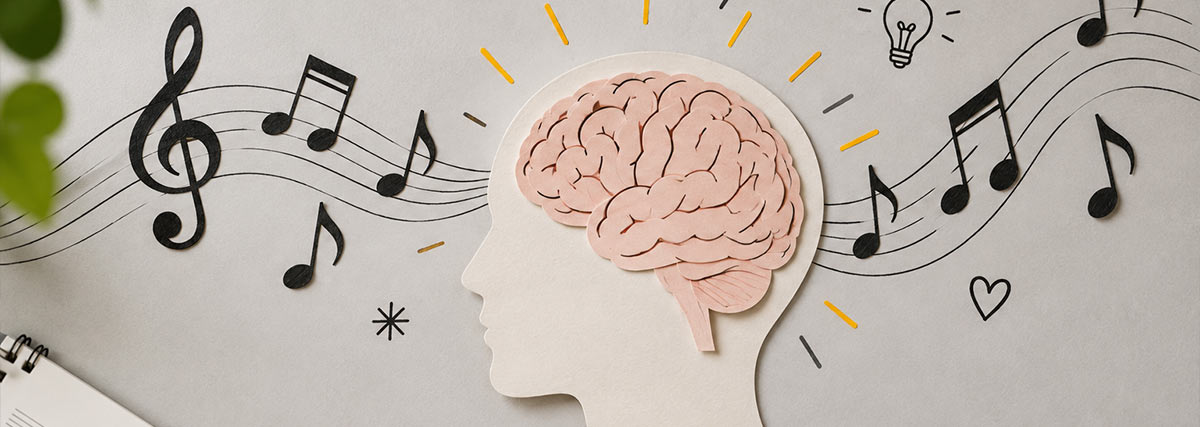
There are also good reasons to believe that making music can have positive effects on the brain.
Playing an instrument involves many processes at the same time.
You listen closely, remember notes and sequences, follow rhythms, read music and coordinate your hands and fingers.
Research into music and ageing has linked musical activity with memory, attention and what are known as executive functions, among other things.
Learning new skills also keeps the brain active and continually presents it with new challenges.
Of course, this does not mean that playing the piano or guitar is a miracle cure for cognitive health.
Music is, however, an excellent example of an activity that challenges the mind while also bringing joy.
And that may be one of its greatest benefits.
So you do not sit down and think, ‘Today I have to train my brain.’ Instead, you learn a piece you enjoy, discover something new and take pleasure in the journey.
You Do Not Have to Become a Musician Overnight
One of the most appealing aspects of making music later in life is that you can take your time.
Perhaps your initial goal is simply to be able to play a particular song. Once you can, you choose another.
Perhaps you would also like to learn to read music confidently, improve your singing, become more confident on your instrument or even work towards a music exam.
There is no single correct definition of success.
For one person, success means being able to play an entire piece of music without stopping.
For someone else, it means sitting down at the piano after a long day and simply enjoying music for half an hour.
Both are equally worthwhile.
Even small steps forward are genuine progress.
Which Instrument Should You Learn?
The best instrument is usually the one you genuinely want to play.
If you have always dreamt of playing the piano, start with the piano.
If you love the sound of the guitar, give the guitar a try.
If you have long enjoyed singing, singing lessons may be the ideal place to start.
You do not have to choose an instrument simply because you think it will be particularly easy to learn at your age.
Your enjoyment and motivation are far more important.
At Dolce Music Institute adult students can learn at their own pace and work towards goals that are personally meaningful to them.
Lessons are tailored to your current level, whether you are a complete beginner or returning to music after many years.
You Can Simply Start With an Initial Lesson
You do not have to make a long-term commitment straight away.
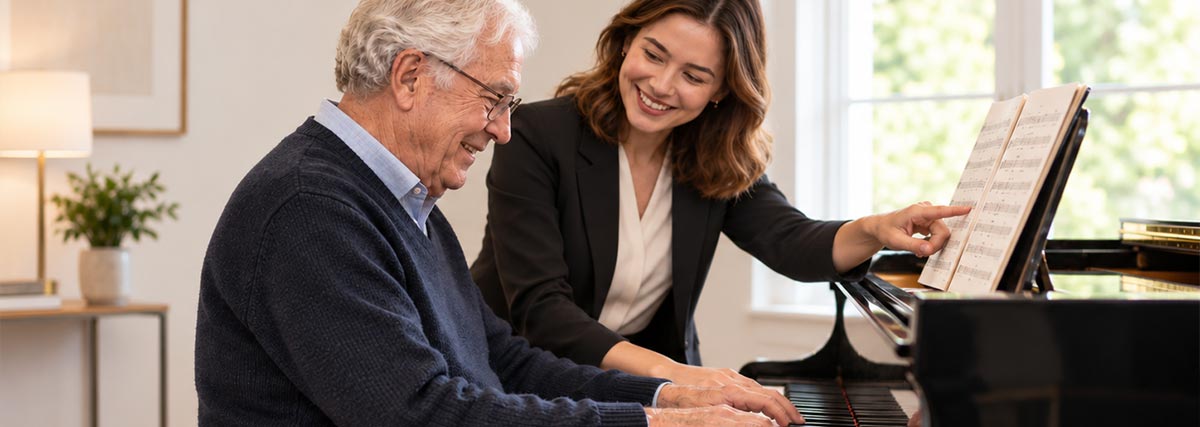
If you are curious about what it feels like to learn an instrument, simply begin with an initial lesson and see whether you enjoy it.
A good teacher will help you find the right starting point, establish meaningful priorities and set realistic goals.
You may discover that making music brings you far more joy than you expected.
And perhaps one of the greatest advantages of starting at 60 is precisely this: you are finally allowing yourself to do something simply because you genuinely want to.
It Really Is Never Too Late
There is no age limit on enjoying music.
Whether you pick up an instrument for the first time at 60, return at 70 to something you once played, or are simply looking for a new hobby, music can bring joy, variety and a genuine sense of achievement to everyday life.
You do not have to be a natural. You do not have to have started as a child. And you certainly do not have to become a professional.
You just have to begin.
If you have been thinking about learning an instrument for years, perhaps now is the perfect time to finally give it a try.

Can You Still Learn a Musical Instrument at 60? Yes – and It’s Worth It
There is a persistent belief that it is best to learn a musical instrument when you are young. Children have plenty of time to practise, their brains are still developing, and it often seems [...]

Can Anyone Learn to Sing – or Do You Need a “Good Voice”?
When it comes to singing, the same belief comes up surprisingly often. Sooner or later, someone will say something like: “Unfortunately, I can’t sing.” Sometimes it is said quite matter-of-factly, sometimes with a little [...]

Returning to Piano After a Long Break: How Adults Can Start Again Successfully
At some point, the feeling returns. You hear a piece you once played, spot a piano at a friend’s house, or come across your old sheet music tucked away in a cupboard [...]

Singing Lessons in Berlin: Everything Beginners Should Know Before Their First Lesson
Starting singing lessons can be very exciting. At the same time, it is completely normal to feel a little nervous, especially when singing in front of a teacher for the first time. Many beginners… [...]

How to Find the Right Music Teacher in Berlin: 10 Things to Consider
Anyone who wants to learn music usually looks forward to the moment their lessons finally begin. However, before the first lesson takes place, there is one important question to consider: how do you find the right... [...]

The Second-Best Time Is Now: An Interview with Piano Teacher Wenxiao
“The best time to learn music may be in childhood — but the second-best time is always now.” An interview with our piano teacher Wenxiao about his journey into music, his mentors and [...]
SIMILAR ARTICLES