About the Author: Dolce Music Institute Editorial Team

Many adults have carried the wish to learn the guitar for years.
Some never had the opportunity earlier in life, while others wish to reconnect with music after a long break.
In a creative and international city like Berlin, more and more adults are discovering the joy of learning an instrument – not for exams or pressure to perform, but simply for themselves.
Guitar lessons for adults differ significantly from traditional music lessons for children.
Adults learn more consciously, bring life experience with them, and usually know exactly why they want to begin.
Precisely for this reason, getting started can often be much more enjoyable, personal and motivating than many people initially imagine.

Why the Guitar Is an Ideal Instrument for Adults
The guitar is one of the most accessible instruments for beginners.
After just a few weeks, many students can play simple chords and accompany their first songs.
These early successes are highly motivating and help students maintain their enjoyment of learning in the long term.
Another major advantage of the guitar is its versatility.
Whether pop, rock, singer-songwriter, blues, jazz or classical music, the guitar adapts beautifully to almost every musical style.
Many adults choose guitar lessons because they are looking for a creative outlet away from work, have long dreamed of making music, wish to reduce stress, or simply want to learn to play their favourite songs.
For many, practising becomes one of the calmest and most enjoyable moments of the day.

Do You Need to Be Musically Gifted to Begin?
One of the greatest concerns for adult beginners is whether they are “musical enough” at all.
In truth, curiosity, patience and regular practice are far more important than any supposed natural talent.
Good guitar tuition introduces complete beginners to the instrument step by step.
No previous experience is required.
A sense of rhythm, coordination, listening skills and musical understanding develop over time – especially with the right guidance.
Many adults who once believed they were unmusical soon realise that all they needed was the right way to begin.

Why Guitar Lessons for Adults Should Be Different
Adults learn differently from children.
Many want to understand why something works, rather than simply repeating exercises mechanically.
At the same time, they need lessons that are clearly structured while also fitting around work, daily life and personal commitments.
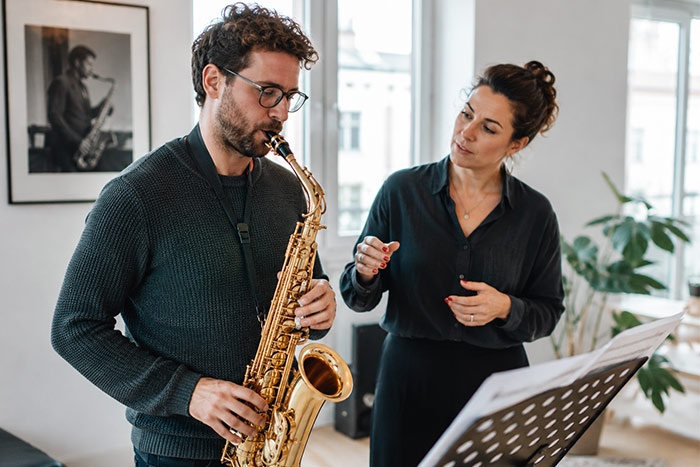
A good guitar teacher understands this and adapts the lessons accordingly.
Some adults mainly want to learn simple chords and play songs at home.
Others are interested in technique, improvisation, music theory or a deeper understanding of the instrument.
The best lessons are always tailored to each student’s personality, goals and learning pace.
Especially at the beginning, it is important to feel comfortable in lessons – particularly if you are still unsure or need a little courage to get started.
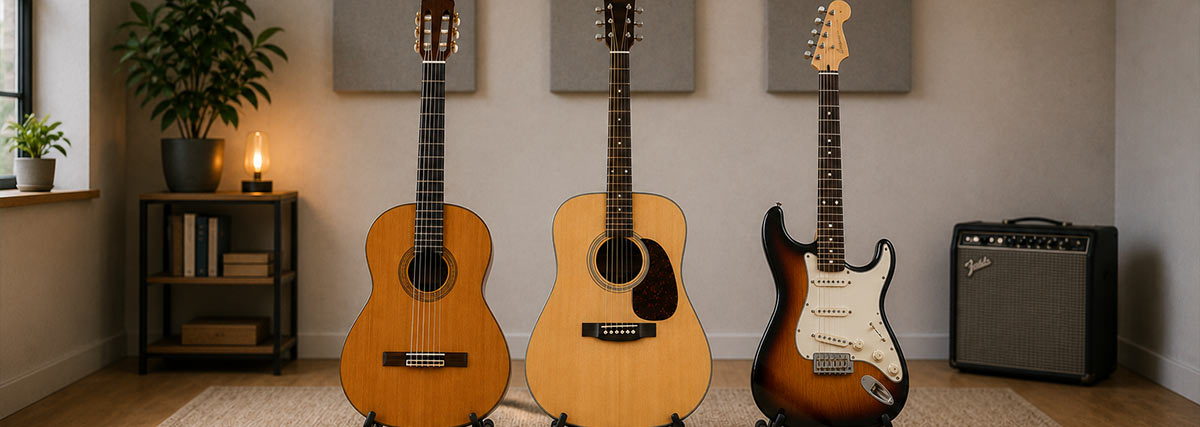
The Right Guitar for Getting Started
Many beginners wonder whether they should start with a classical guitar, an acoustic guitar or an electric guitar.
There is no universal answer to this. The best guitar is often the one that genuinely makes you want to play.
Classical guitars are valued for their warm, mellow sound and comfortable nylon strings.
Acoustic guitars are especially popular with students who want to sing and accompany modern songs.
Electric guitars are a wonderful choice for anyone drawn to rock, blues, indie or modern styles.
A good teacher can help beginners choose an instrument that feels comfortable, is motivating, and suits their own musical interests.

Learning Guitar in Berlin
Berlin is one of Europe’s most inspiring cities for music and creativity.
The city’s open, artistic atmosphere encourages many adults to finally begin something they may have been putting off for a long time.
The city offers a vibrant musical culture – from small concerts and jam sessions to creative communities and independent venues.
For adults learning the guitar, this environment can be especially motivating.
Guitar lessons in Berlin are especially popular among working professionals, expats, creatives and adults looking for a meaningful balance to their everyday lives.

How Quickly Do Adults Make Progress?
Progress naturally depends on consistency and practice habits. However, many adult beginners are pleasantly surprised by how quickly the first results begin to appear.
After just a few weeks, many students can play simple chords, follow basic rhythm patterns and begin working on their first beginner-friendly songs.
What matters most is not perfection, but regular practice. Even short daily practice sessions of 15 to 20 minutes can make a significant difference in the long term.

It Is Never Too Late to Learn Music
The beauty of learning music as an adult is that it often comes from very personal reasons. It is usually not about competition or external pressure, but about the joy of learning and experiencing music.
Many adults worry that they are starting too late.
In fact, adults often make excellent progress because they are motivated, focused and emotionally connected to the learning process.
Music does not need to be perfect to be valuable. Playing the guitar can bring calm, creativity, confidence and genuine joy into everyday life.
Guitar Lessons for Adults in Berlin
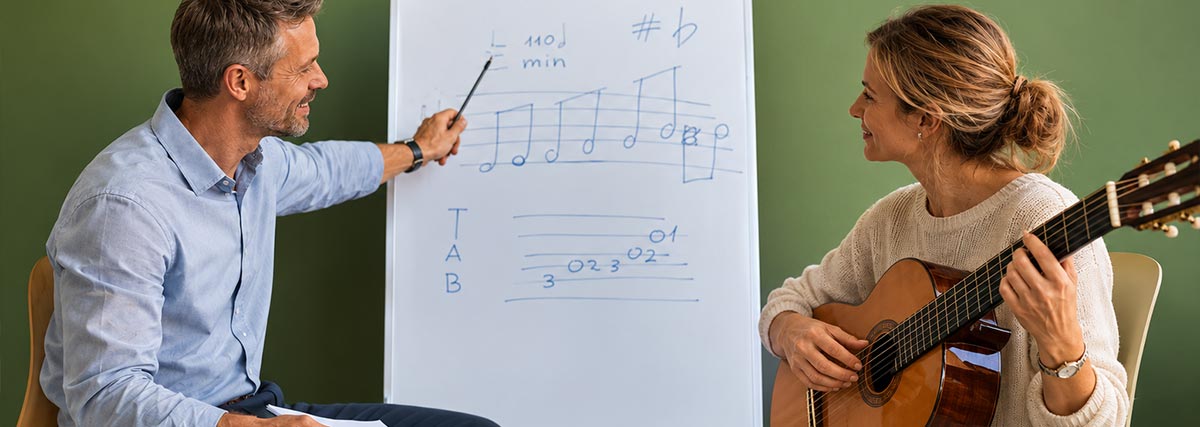
Adults who wish to begin guitar lessons in Berlin should above all look for tuition that is friendly, structured and tailored to their individual needs.
The ideal introduction to the guitar has nothing to do with pressure or perfection. It is about building confidence step by step, developing musical skills and enjoying the process of learning something new.
At Dolce Music Institute we offer professional guitar lessons in Berlin for adults of all levels – from complete beginners to advanced players. Our lessons are individually tailored to each student and take place in a friendly, inspiring and supportive atmosphere.
Whether classical guitar, acoustic guitar, electric guitar, rock, blues or jazz – our experienced teachers will guide you step by step and at your own pace.
Because ultimately, that is what making music is all about.

Can You Still Learn a Musical Instrument at 60? Yes – and It’s Worth It
There is a persistent belief that it is best to learn a musical instrument when you are young. Children have plenty of time to practise, their brains are still developing, and it often seems [...]

Can Anyone Learn to Sing – or Do You Need a “Good Voice”?
When it comes to singing, the same belief comes up surprisingly often. Sooner or later, someone will say something like: “Unfortunately, I can’t sing.” Sometimes it is said quite matter-of-factly, sometimes with a little [...]

Returning to Piano After a Long Break: How Adults Can Start Again Successfully
At some point, the feeling returns. You hear a piece you once played, spot a piano at a friend’s house, or come across your old sheet music tucked away in a cupboard [...]

Singing Lessons in Berlin: Everything Beginners Should Know Before Their First Lesson
Starting singing lessons can be very exciting. At the same time, it is completely normal to feel a little nervous, especially when singing in front of a teacher for the first time. Many beginners… [...]

How to Find the Right Music Teacher in Berlin: 10 Things to Consider
Anyone who wants to learn music usually looks forward to the moment their lessons finally begin. However, before the first lesson takes place, there is one important question to consider: how do you find the right... [...]

The Second-Best Time Is Now: An Interview with Piano Teacher Wenxiao
“The best time to learn music may be in childhood — but the second-best time is always now.” An interview with our piano teacher Wenxiao about his journey into music, his mentors and [...]
SIMILAR ARTICLES