About the Author: Dolce Musik Institut Redaktion

Starting the saxophone as an adult can feel both exciting and a little intimidating. Perhaps you have loved the sound of this instrument for many years. Perhaps you have always imagined that, one day, you would play jazz, blues, soul, classical music, or your favourite melodies on the saxophone.
Or perhaps you simply feel that now is the right time to begin something musical, expressive, and truly beautiful.
Whatever has led you to the saxophone, there is no need to feel nervous before your first lesson.
Quite the opposite — it may become one of the most inspiring musical experiences you have had so far.
The saxophone has the wonderful ability to connect people with music very quickly, even if they have never played an instrument before.
If you are thinking about taking your first saxophone lesson in Berlin, here is what you can realistically expect.

You Do Not Need Any Previous Musical Experience
Many adults worry that it is “too late” to learn an instrument.
They imagine that saxophonists must have started as children, be able to read music fluently, or already understand music theory.
Fortunately, that is not true.
Adult beginners come with a wide range of different backgrounds and starting points.
Some may have played another instrument many years ago.
Some can read a little music, while others have no musical experience at all.
A good saxophone teacher will meet you exactly where you are.
Your first lesson is not an exam. It is not a test of your talent.
It is simply the beginning of a new skill.
The most important things you can bring are curiosity, patience, and a willingness to give it a try.
Your Teacher Will Help You Become Familiar with the Instrument
At first glance, the saxophone can seem a little complicated.
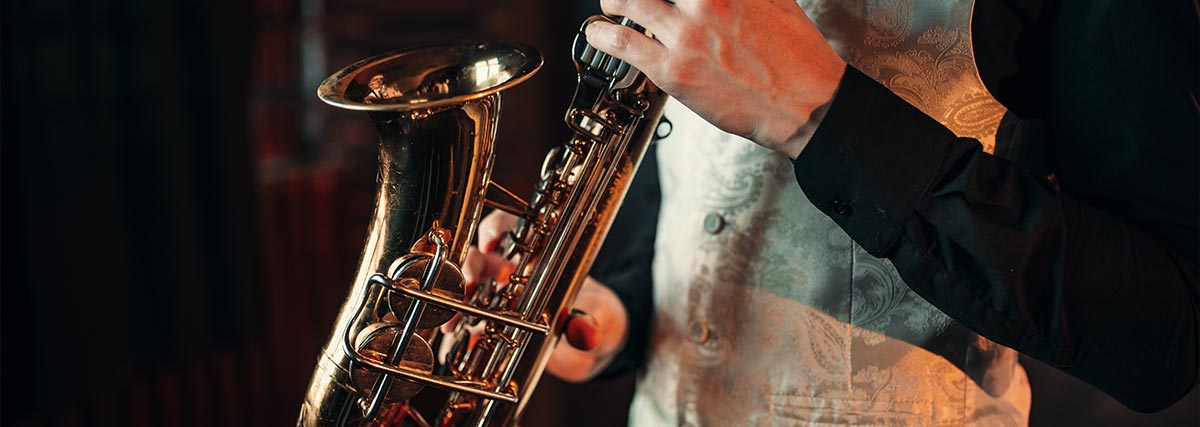
It has many keys, a mouthpiece, a reed, a neck, a strap, and several parts that need to be assembled correctly.
In your first lesson, your teacher will usually show you, calmly and practically, how the instrument works.
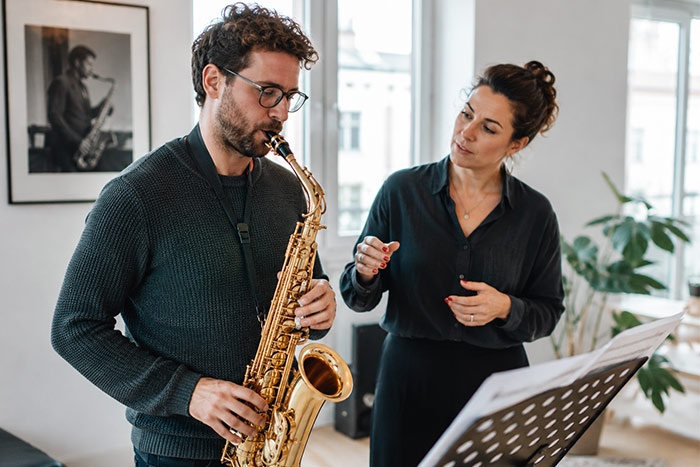
You may learn how to hold the saxophone comfortably, how to attach the mouthpiece, what role the reed plays, and how to adjust the strap so that the instrument feels safe and comfortable.
This is particularly important, as good posture and a relaxed approach to handling the instrument make playing much easier.
At this stage, you do not need to understand everything perfectly.
Your teacher will guide you step by step, and with a little repetition, the instrument will soon begin to feel much more natural.
The First Sound Is a Special Moment
One of the most beautiful moments in the first saxophone lesson is often the very first sound.
It does not need to be perfect. It may sound a little airy, uncertain, or surprising. That is completely normal.
The saxophone is played with a reed, and the way you shape your mouth around the mouthpiece is called the embouchure.
Your teacher will help you understand how much pressure you need, how to blow, and how to keep your lips and jaw relaxed so that the sound can emerge freely.
Many beginners are surprised that they can produce a sound relatively quickly.
It may take a little adjustment, but the first sound is often a wonderful moment.
At that moment, the saxophone is no longer just an object in your hands — it begins to become your instrument.
You Will Probably Learn a Few Simple Notes
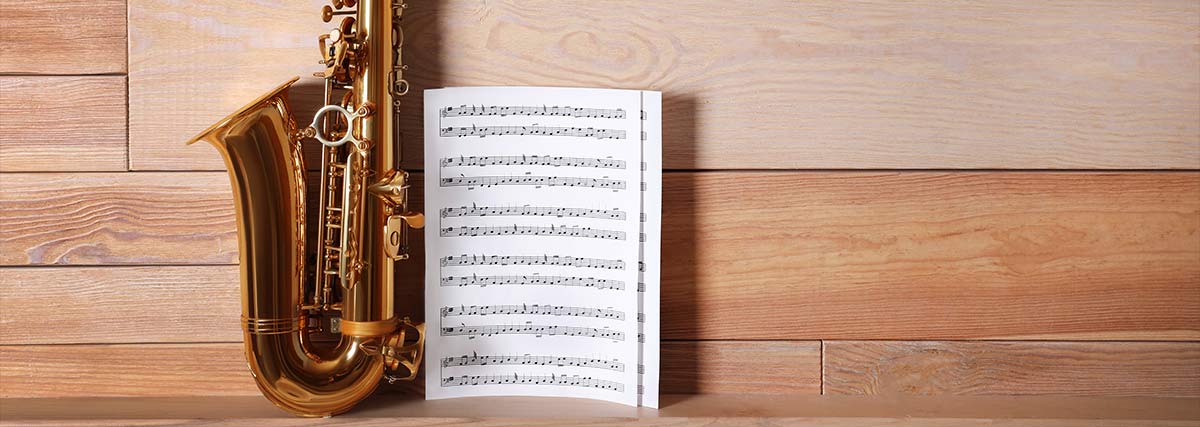
Once you feel a little more confident producing a sound, your teacher may introduce you to your first basic notes.
You will learn simple fingerings and practise moving slowly from one note to the next.
This part of the lesson is usually very practical.
You may play long notes, short notes, or small note patterns.
The aim is not to play a complete piece straight away, but to understand the connection between breath, fingers, and sound.
The saxophone is a very rewarding instrument because even just a few notes can already sound musical.
With good guidance, you will already begin to get a sense of how melody is created in your very first lesson.

Breathing Plays an Important Role in Saxophone Playing
As the saxophone is a wind instrument, breathing is especially important.
Many adult beginners are surprised by how much the quality of their sound depends on good breath control.
Your teacher may show you how to breathe more deeply and control the airflow evenly.
This does not mean that you need to be exceptionally athletic or have an enormous lung capacity.
Rather, it is about using your breath consciously and efficiently.
Good breathing helps make the sound fuller, warmer, and more stable.
It also helps you stay more relaxed while playing.
Many students come to find this aspect of saxophone playing surprisingly enjoyable over time, almost meditative.

You May Talk About the Music You Love
The first lesson is also a good opportunity for your teacher to get to know your musical interests.
Would you like to play jazz?
Are you drawn to blues, funk, soul, classical saxophone, film music, or pop songs?
Do you dream of improvising one day, or would you prefer to begin by reading simple melodies?
There is no wrong answer here.
The saxophone is an incredibly versatile instrument, and your lessons can be shaped around the music that truly inspires you.
Of course, beginners first need a solid foundation.
However, learning is far more enjoyable when these foundations are connected to music that means something to you personally.

You Do Not Need to Sound Good Straight Away
This is important: your first saxophone lesson is not about sounding impressive.
It is about starting in the right way.
Every saxophonist once had a first lesson.
Every player has experienced uncertain notes, squeaks, airy sounds, and unfamiliar finger movements.
These are not signs that you are failing.
They are simply part of the learning process.
A good teacher will help you avoid unnecessary frustration by showing you how to practise effectively from the very beginning.
With the saxophone, small details make a big difference: the reed, the embouchure, the breathing, the angle of the mouthpiece, and the way you hold the instrument.
Once these foundations gradually become secure, progress becomes much easier.
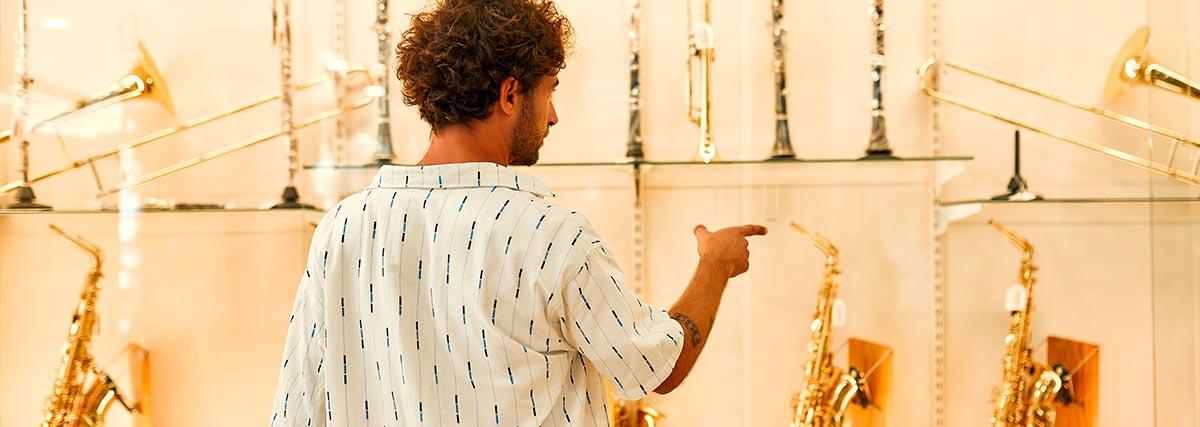
Should You Buy or Rent a Saxophone Before Your First Lesson?
If you do not yet own a saxophone, it is usually sensible to seek advice before buying one.
There are different types of saxophone, with the alto and tenor saxophones being especially common choices for adult beginners.
The alto saxophone is often recommended as a first instrument, as it is slightly smaller and easier to handle.
The tenor saxophone has a deeper, fuller sound and is also very popular, especially among lovers of jazz and blues.
Your teacher can help you decide which instrument best suits your goals, your budget, and your playing comfort.
A poorly chosen instrument can make learning unnecessarily difficult.
That is why it is worth seeking expert advice before making a purchase.
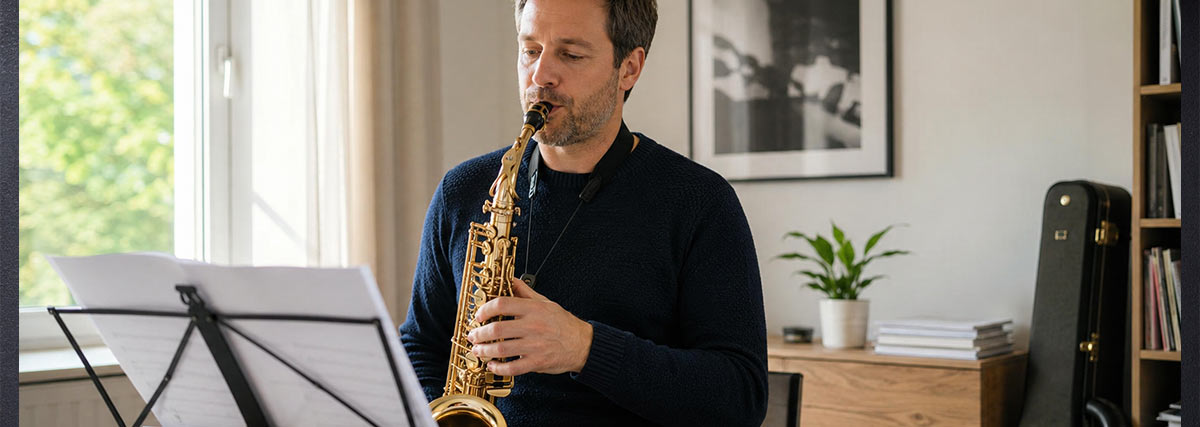
How Much Progress Can You Expect After Your First Lesson?
After just one lesson, you will not, of course, be a saxophonist yet — but you may already feel that this instrument is possible for you.
And that is a beautiful and important feeling.
You may leave your first lesson knowing how to assemble the instrument, how to produce your first sounds, how to play a few simple notes, and how to practise at home.
More importantly, however, you will gain a clearer idea of what your musical journey could look like.
Progress on the saxophone comes through regular, mindful practice.
Even short but consistent practice sessions can make a real difference.
For adults with busy lives, it is often better to practise regularly for 15 or 20 minutes than to wait for a long practice session that may never actually happen.

Learning the Saxophone as an Adult in Berlin
Berlin is a wonderful place to begin your musical journey.
The city has a vibrant artistic atmosphere, a great openness to creativity, and a strong connection to many different styles of music.
For adult beginners, this can be very inspiring.
Taking saxophone lessons as an adult is not only about learning notes. It is about allowing yourself to discover music in a new way.
It means developing a skill that belongs to you.
And it means consciously taking time to step away from the pressures of everyday life and enter a more creative, expressive space.
At Dolce Music Institute saxophone lessons are designed for adults who wish to learn properly, enjoy the process, and develop confidence step by step.
Whether you are an absolute beginner or returning to music after many years, the first lesson is a warm and encouraging beginning.

Final Thoughts
Your first saxophone lesson in Berlin should feel encouraging, practical, and inspiring.
You do not need to arrive with musical knowledge, great confidence, or perfect technique.
All you need is interest.
The saxophone is expressive, soulful, and full of personality.
It can sound powerful and distinctive, but also warm, gentle, and intimate.
As an adult beginner, you have the advantage of knowing why you want to learn.
That motivation is extremely valuable.
So, if you have been thinking about starting the saxophone for some time, your first lesson could be the moment when everything begins.
One sound, one note, one breath — and suddenly, the saxophone is no longer just an instrument you admire.
It becomes something you can learn, enjoy, and make your own.
Classical Piano or Modern Songs: Which Is Right for You?
Adults who begin learning the piano often face a simple but important question: should they learn classical music, or would they rather play modern songs? Some dream of one day playing a piece [...]
Your First Saxophone Lesson in Berlin: What to Expect as an Adult Beginner
Starting the saxophone as an adult can feel both exciting and a little intimidating. Perhaps you have loved the sound of this instrument for many years. Perhaps you have always [...]

A Perfect Day in Munich: What to See and Do
Munich is one of those cities that feels elegant, vibrant and relaxed at the same time. The city is home to historic buildings, green parks, excellent food, stylish shopping streets and a warm Bavarian charm that makes it easy... [...]
Singing Lessons in Berlin: From Passion to Progress
Many adults dream of being able to sing better. Some quietly sing along to their favourite music at home. Others used to sing and would like to start again. Some have loved music for many years, but have had [...]

Guitar Lessons in Berlin for Adults: The Ideal Starting Point for Beginners
Many adults have carried the wish to learn the guitar for years. Some never had the opportunity earlier in life, while others wish to reconnect with music after a long break. In a [...]

10 Famous German Singers You Should Know
Over the decades, Germany has produced many remarkable singers. Some became international icons, while others mainly shaped the German-speaking world — with voices that are unmistakable, [...]
SIMILAR ARTICLES