About the Author: So Wai

The saxophone is both a delicate and complex instrument. Proper saxophone care is essential to ensure that the instrument functions reliably over the long term and is able to produce its full, rich sound.
To allow it to reach its full potential, careful maintenance is essential.
Regular maintenance not only extends its lifespan, but also ensures responsive keys, well-preserved pads, and a stable, reliable sound every time it is played.
If you would like to understand your instrument better and develop your technique, structured tuition can be extremely helpful. Many adults choose to work with an experienced teacher and take Saxophone lessons in Berlin .
In this guide, we will explore the key steps of daily cleaning, outline recommended maintenance intervals, and introduce the essential care products every saxophonist should keep at hand to maintain their instrument in perfect condition.
General Cleaning and Care Routines
Careful daily maintenance forms the foundation of a well-performing and long-lasting saxophone.
Before playing, it is advisable to grease the cork regularly. This helps prevent cracks, makes assembling and disassembling the instrument easier, and ensures a smooth and secure fit.
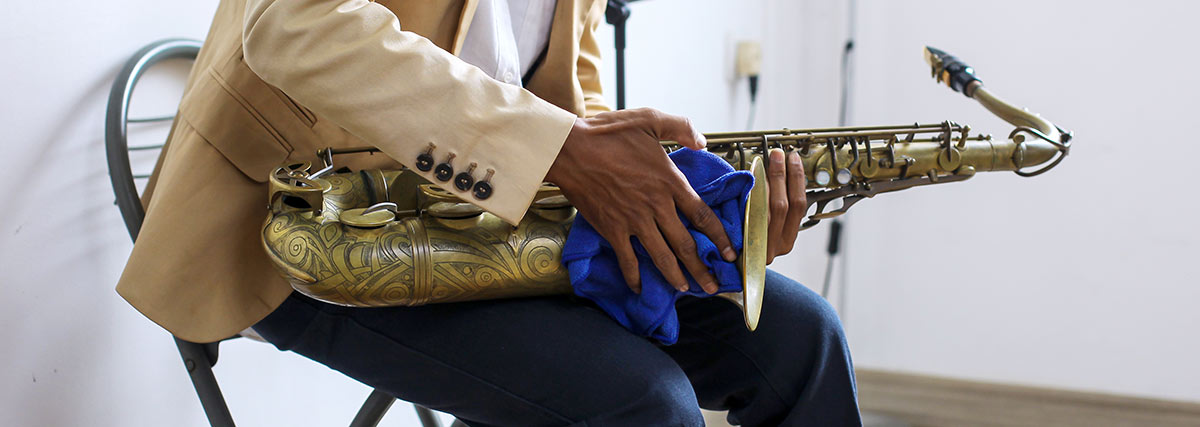
After each practice session or concert, the inside of the saxophone should be cleaned with a pull-through swab to remove accumulated moisture.
This simple habit helps prevent corrosion and protects the pads.
The exterior also deserves careful cleaning with a soft cloth: fingerprints, dust and residue can make the lacquer appear dull and affect the overall appearance of the instrument.
The pads require particular attention.
Excess saliva should be removed using absorbent paper or a soft cloth. This helps prevent the keys from sticking and extends their lifespan.
Finally, the reed should not be neglected.
It should be stored in a suitable case to maintain stable humidity and prevent warping.
A worn reed should be replaced in good time to maintain an even tone and a good response from the instrument.
By following these simple and regular care steps, the saxophonist protects their instrument and benefits from a more stable, comfortable and reliable playing experience.
Recommended Maintenance Intervals
Even with careful daily cleaning, a saxophone inevitably changes over time.
Fluctuations in temperature and humidity, frequent assembly and disassembly, as well as many hours of playing gradually affect the mechanism.
Keys can loosen, individual screws may shift slightly, pads may compress, and small air leaks can develop.
These changes are often barely noticeable at first, but they affect intonation, response, and sound quality, making the instrument more difficult to control.
For this reason, regular professional servicing is just as important as daily cleaning.
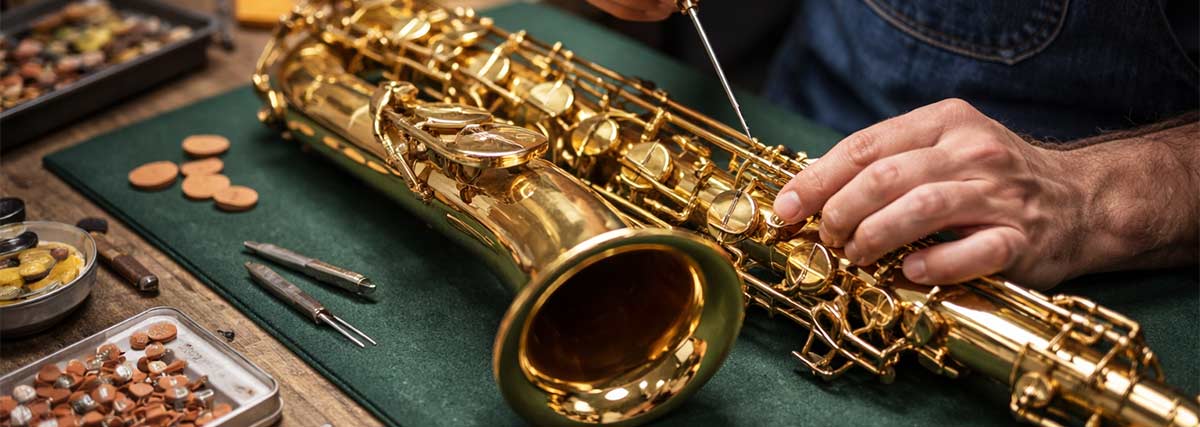
As a general rule, it is a sensible investment to have the saxophone checked by a specialist technician every three to four months – particularly for musicians who play frequently.
During this inspection, the instrument technician can check the overall adjustment, regulate the keys, replace worn pads or corks, adjust the spring tension, oil the mechanism, and test the instrument for air leaks.
These preventative interventions often make playing noticeably smoother and restore a clarity of tone that one might not even have realised had diminished.
They also help to avoid many frustrations. Some difficulties that players attribute to their own level of playing – unstable notes, poor response, or problems in quiet passages – are in fact often caused by mechanical issues.
For musicians in Berlin, there are several excellent woodwind repair workshops, particularly in central districts such as Charlottenburg, Kreuzberg and Prenzlauer Berg. Berlin has a long tradition of instrument making, and many specialised workshops offer professional servicing and repair for saxophones.
Finding a trustworthy technician and scheduling regular maintenance appointments can significantly improve playing comfort.
Maintenance should therefore not be viewed as an occasional repair, but rather as a natural part of instrument care – just as essential as daily practice.
Essential Care Products Every Saxophonist Should Have
Beyond daily care routines and regular visits to an instrument technician, it can be very helpful to keep a few basic maintenance tools at home.
These accessories do not replace a professional technician, but they help keep the instrument in good condition between servicing appointments and allow smaller issues to be addressed early.
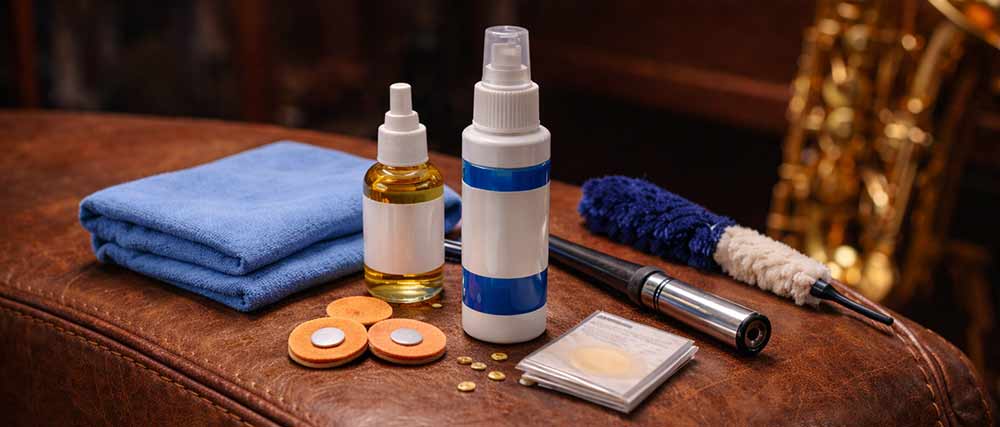
A special oil for key mechanisms is essential.
The mechanism of the saxophone consists of many metal parts that move constantly. Light lubrication reduces friction, limits wear, and ensures smooth and quiet operation of the keys. When used sparingly, it can significantly improve playing comfort.
For external care, a specialised polishing spray used together with a microfibre cloth is recommended. This helps protect the lacquer or silver plating from oxidation and premature corrosion.
Occasional cleaning also helps preserve the instrument’s shine — particularly for musicians who often play under warm stage lighting or outdoors.
A small set of precision screwdrivers designed for woodwind instruments can also be very useful.
Due to vibrations, individual screws can gradually loosen over time. With the proper tools, such small adjustments can be made carefully by the player. More complex adjustments, however, should always be carried out by a professional technician.
Some musicians also use a leak light or special test paper to check the sealing of the pads. Even small air leaks can affect the intonation and response of the instrument. Detecting such problems early can make later repairs significantly easier.
Finally, storage also plays an important role. Moisture absorbers or small silica gel packets placed in the instrument case help regulate humidity and protect the pads, corks and felts.
Together, these simple tools form a practical care kit that helps maintain the reliability and good condition of the saxophone over the long term.

Conclusion
Keeping a saxophone in perfect condition is not a one-time task, but the result of continuous attention.
From daily cleaning and regular professional servicing to the use of appropriate maintenance tools, every small action contributes to the health of the instrument.
These habits may seem insignificant at first glance, but their impact is considerable: better sound quality, more reliable mechanics, and noticeably greater playing comfort.
A well-maintained saxophone responds more easily, produces a clearer tone, and allows the musician to focus entirely on what truly matters — the music.
In this sense, proper care is not only about preserving an instrument, but also about protecting one’s own artistic expression.
Looking after your instrument should therefore become just as natural as warming up or tuning before playing.
With regular and preventative care, your saxophone will remain stable, reliable, and ready to accompany your musical journey for many years.
This article is the German (translated here in English) version of our original French article.
Anyone who truly wants to master their instrument will benefit not only from taking good care of it, but also from regular tuition. Professional Saxophone lessons in Berlin can help to significantly improve technique, tone and musical understanding.
You can read the original article here:
https://institutdemusiquedeparis.com/comment-garder-votre-saxophone-en-parfait-etat/

Can You Still Learn a Musical Instrument at 60? Yes – and It’s Worth It
There is a persistent belief that it is best to learn a musical instrument when you are young. Children have plenty of time to practise, their brains are still developing, and it often seems [...]

Can Anyone Learn to Sing – or Do You Need a “Good Voice”?
When it comes to singing, the same belief comes up surprisingly often. Sooner or later, someone will say something like: “Unfortunately, I can’t sing.” Sometimes it is said quite matter-of-factly, sometimes with a little [...]

Returning to Piano After a Long Break: How Adults Can Start Again Successfully
At some point, the feeling returns. You hear a piece you once played, spot a piano at a friend’s house, or come across your old sheet music tucked away in a cupboard [...]

Singing Lessons in Berlin: Everything Beginners Should Know Before Their First Lesson
Starting singing lessons can be very exciting. At the same time, it is completely normal to feel a little nervous, especially when singing in front of a teacher for the first time. Many beginners… [...]

How to Find the Right Music Teacher in Berlin: 10 Things to Consider
Anyone who wants to learn music usually looks forward to the moment their lessons finally begin. However, before the first lesson takes place, there is one important question to consider: how do you find the right... [...]

The Second-Best Time Is Now: An Interview with Piano Teacher Wenxiao
“The best time to learn music may be in childhood — but the second-best time is always now.” An interview with our piano teacher Wenxiao about his journey into music, his mentors and [...]